
French Macarons
There are a few different ways macarons are made. French macarons are considered easier to make, while Swiss and Italian macarons are considered more challenging but are more structurally sound.
French macarons also require less equipment. While I love Italian macarons, I like to keep things simple and usually stick with the French method.
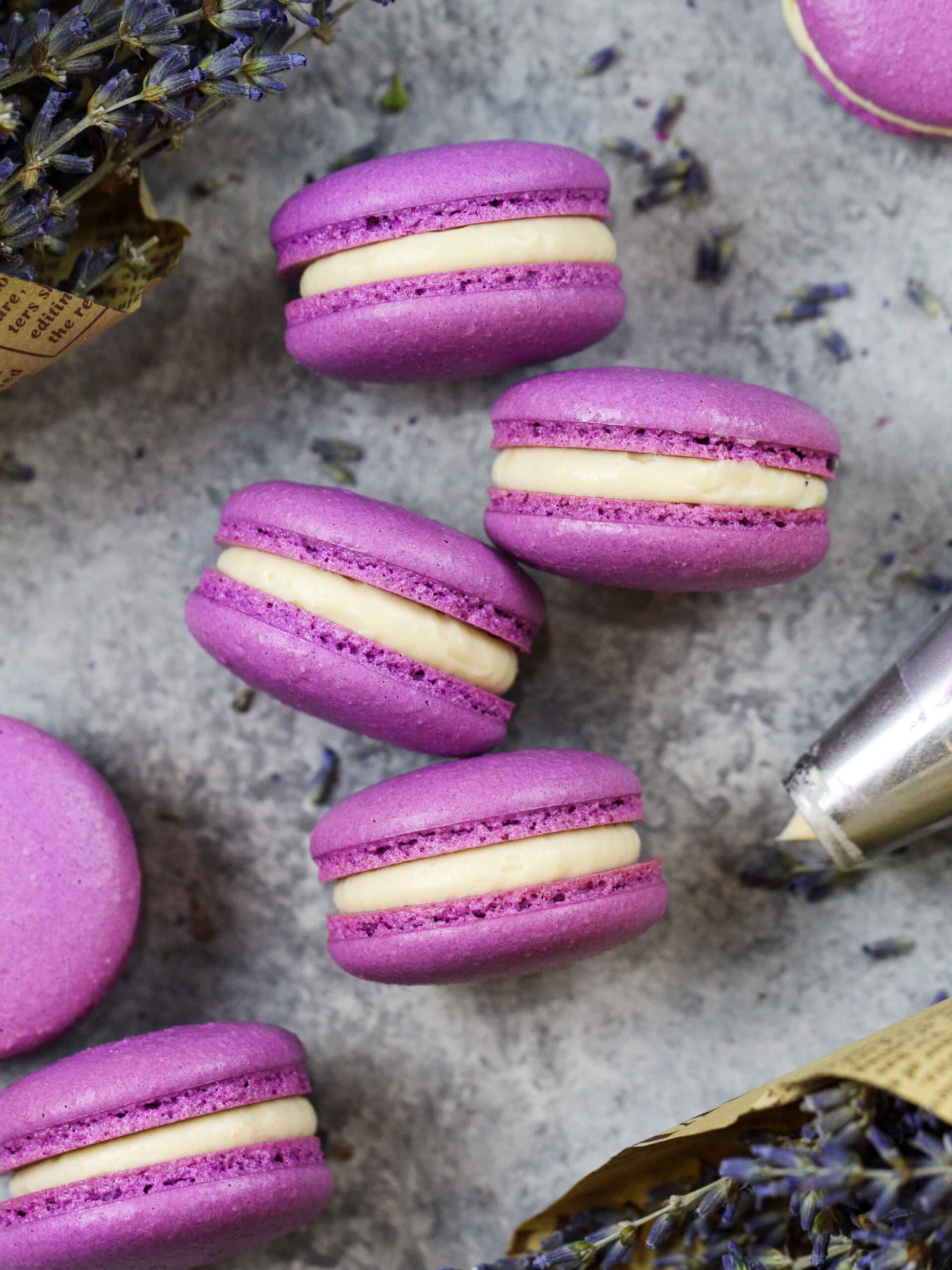
The French Method vs. the Italian Method
The French method whisks egg whites together with a bit of sugar to create a French meringue with stiff peaks.
This meringue is then folded with a mixture of superfine almond powder and powdered sugar.
This process of folding the meringue and the dry ingredients together is called macaronage.
There are two significant ways the Italian method differs from the French method.
The first difference is that the Italian method whisks egg whites with a hot sugar syrup to create a stiff meringue.
This step can be a bit tricky to get just right, and it makes Italian macarons harder to make in my opinion.
The second difference is that superfine almond flour and powdered sugar are mixed with raw egg whites to form a paste before any meringue is folded into them.
Both methods require expertise to mix the batter the perfect amount to achieve that elusive, lava-like consistency that leads to perfect macarons.
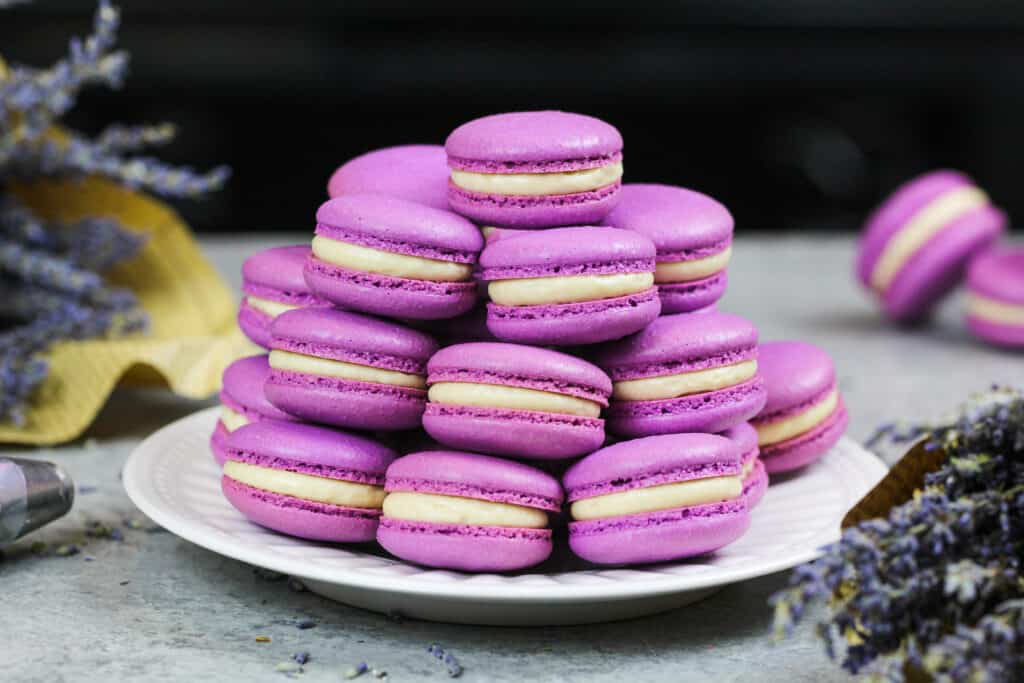
Equipment You’ll Need to Make French Macarons
Like I mentioned above, French macarons don’t require a ton of equipment!
However, I find they turn out best when the ingredients are weighed, and the macarons are baked on a Silpat mat.
As macarons bake, they usually spread less on Silpat mats than on parchment paper.
These are the tools I like to use when I make French macarons:
- Kitchen scale
- Stand Mixer or Electric Mixer
- Large piping bag
- Round piping tip
- Large, flat baking sheets
- Silpat Mats (or parchment paper)
Making French Macarons: Step-by-Step Process
While the recipe below is quite detailed, I find visual cues to be super helpful!
Below are some photos of the process to help guide you through this recipe, and I’ve also included a video in the recipe card at the bottom of this post.
Step #1: Prep Your Ingredients and Equipment
After weighing your ingredients, wipe down your mixing bowl and whisk attachment with a bit of vinegar or lemon juice.
This removes any residual grease and helps the meringue whip up better!
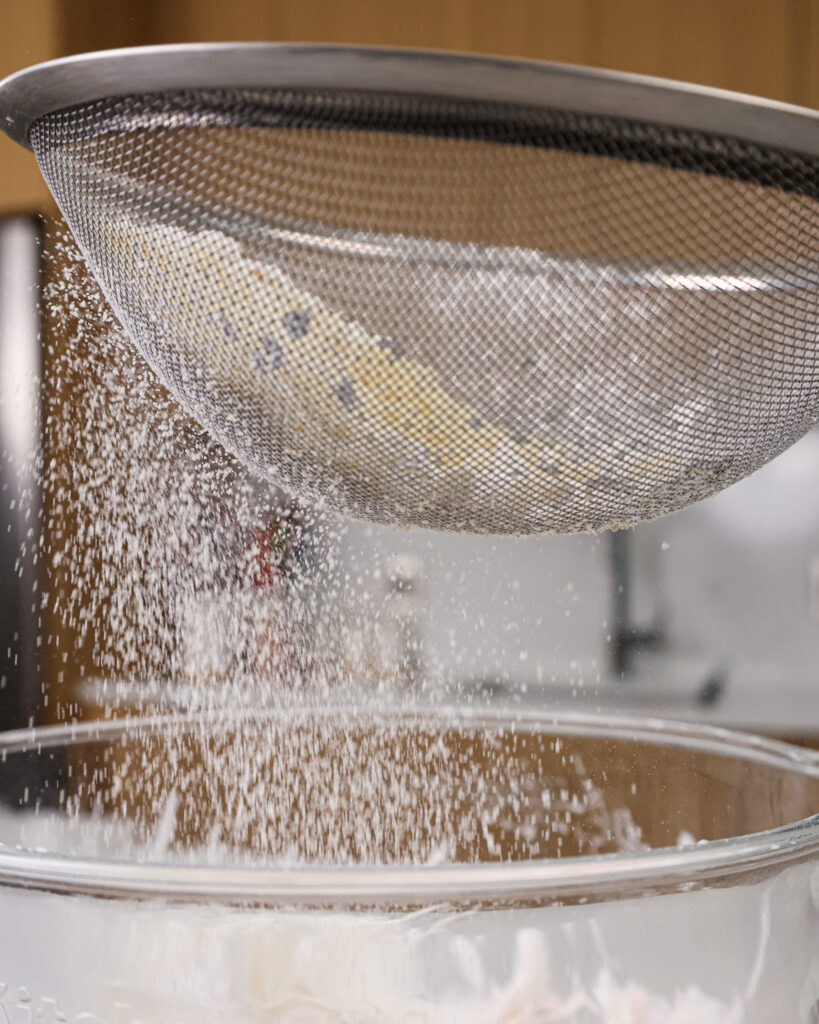
Step #2: Sift the Dry Ingredients
Sifting your superfine almond flour and powdered sugar will help your macaron shells turn out nice and smooth.
This step makes sure that no chunks of almond or powdered sugar get mixed into your macaron batter.
Step #3: Make French Meringue
Next, it’s time to make the French meringue!
Whisk the egg whites on a medium speed until soft peaks form, then add in the granulated sugar.
Once the sugar is incorporated, add in gel food coloring if desired.
Increase the speed to medium-high and mix until stiff peaks form, like in the photo below.
Keep a close eye on your mixer to avoid over-mixing the meringue.

Step #4: Mix the Dry Ingredients into the Meringue
Fold the dry ingredients into the meringue in two additions. Continue to fold the batter until you achieve a lava-like consistency.
The batter should form a thick ribbon that flows off your spatula when it’s lifted, like in the photo below.
Another way to test your batter is the figure 8 test. Try to create a figure 8 using the flowing batter. If you’re able to create one, your batter is ready to go.
If the stream of batter breaks before you’re able to, you may need to stir it a bit more.

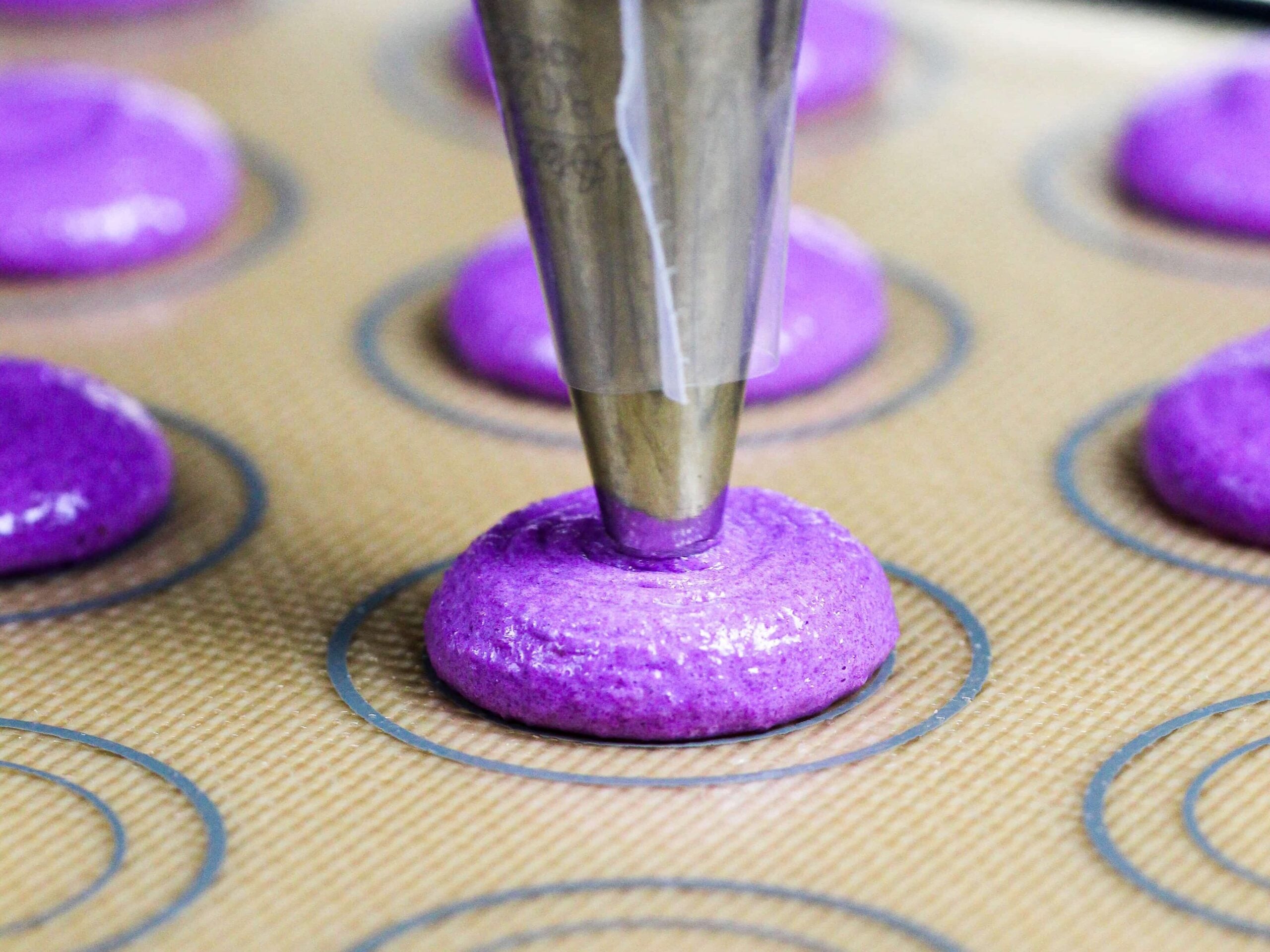
Step #5: Pipe the Macaron Shells
Fill a large piping bag with macaron batter and pipe 1 1/2-inch rounds onto the prepared baking sheets. Space them about 1 inch apart.
Firmly bang or drop your pans on the counter a few times.
This brings any trapped air bubbles to the surface, which can be popped with a toothpick or a scribe.
This can help you avoid hollow or cracked shells.
Step #6: Rest the Piped Macarons
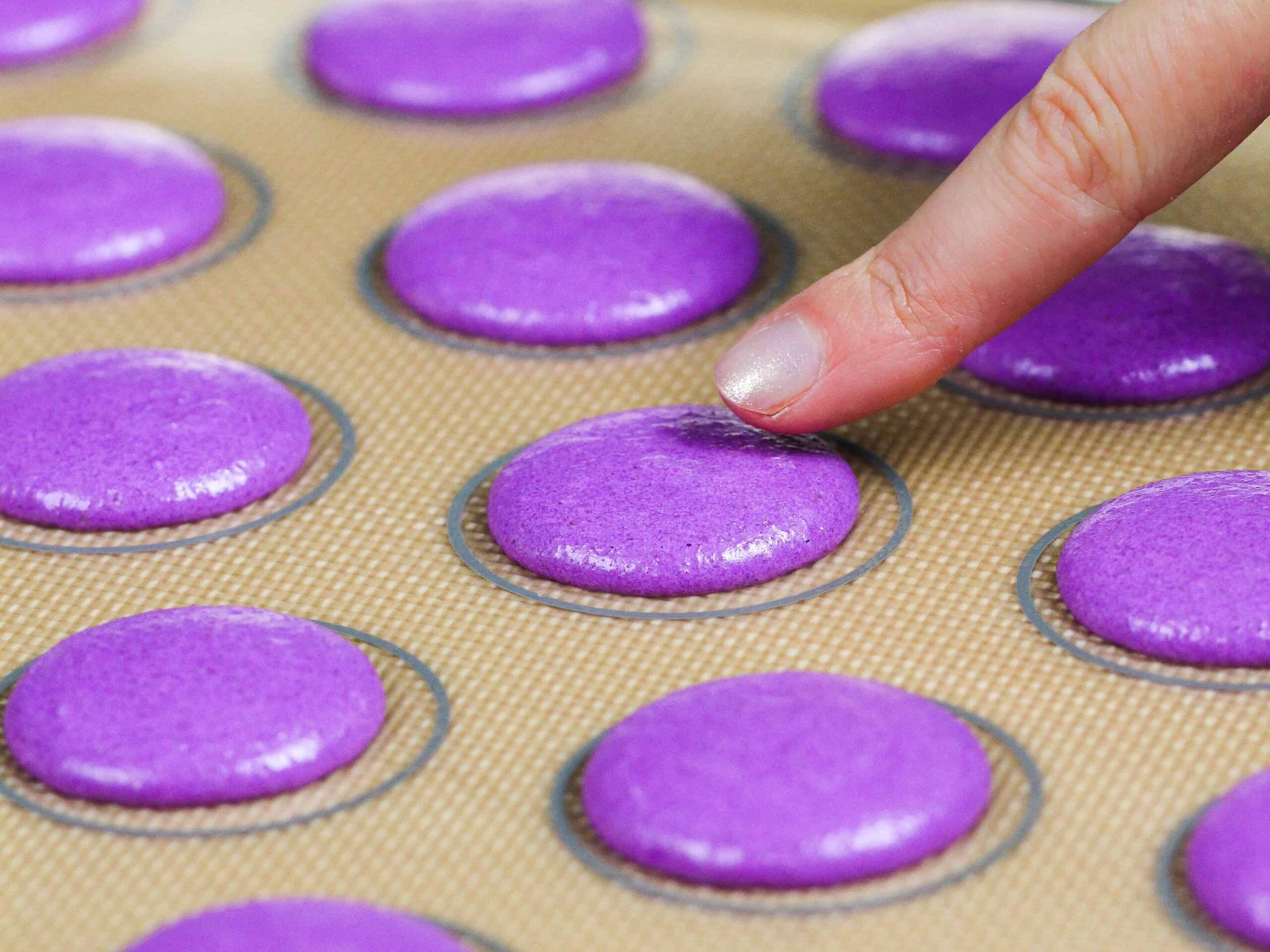
Let the macarons rest for about 30 minutes or until they form a skin.
They should be mostly dry to the touch and look matte once they’re ready to be baked! While the shells rest, preheat your oven.
Step #7: Bake Your Macarons
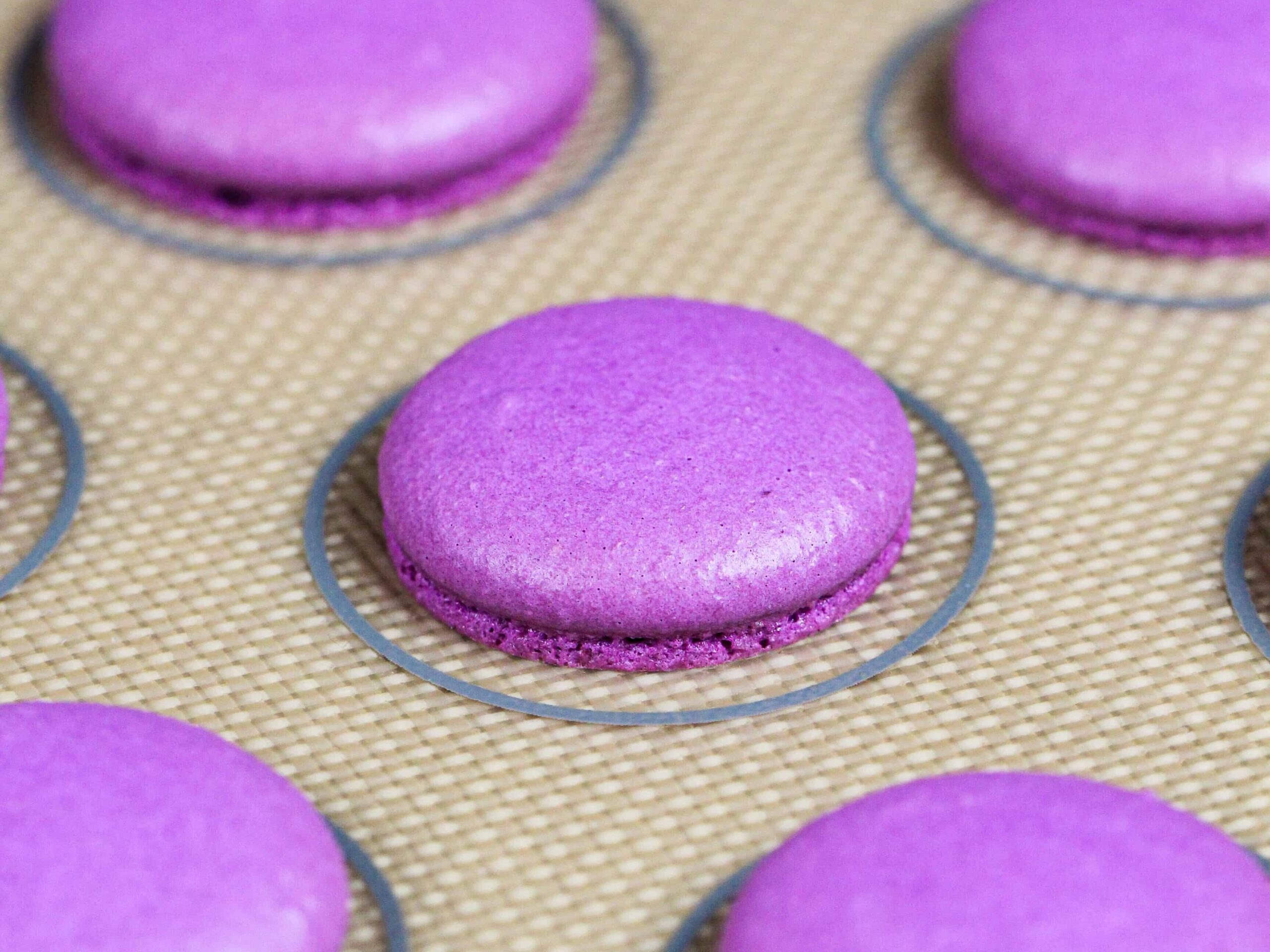
Bake one tray of macarons at a time and place the tray in the middle rack of your oven.
Let the macarons cool fully on the pan, then gently remove them from the Silpat mat.
Step #8: Assemble the Macarons
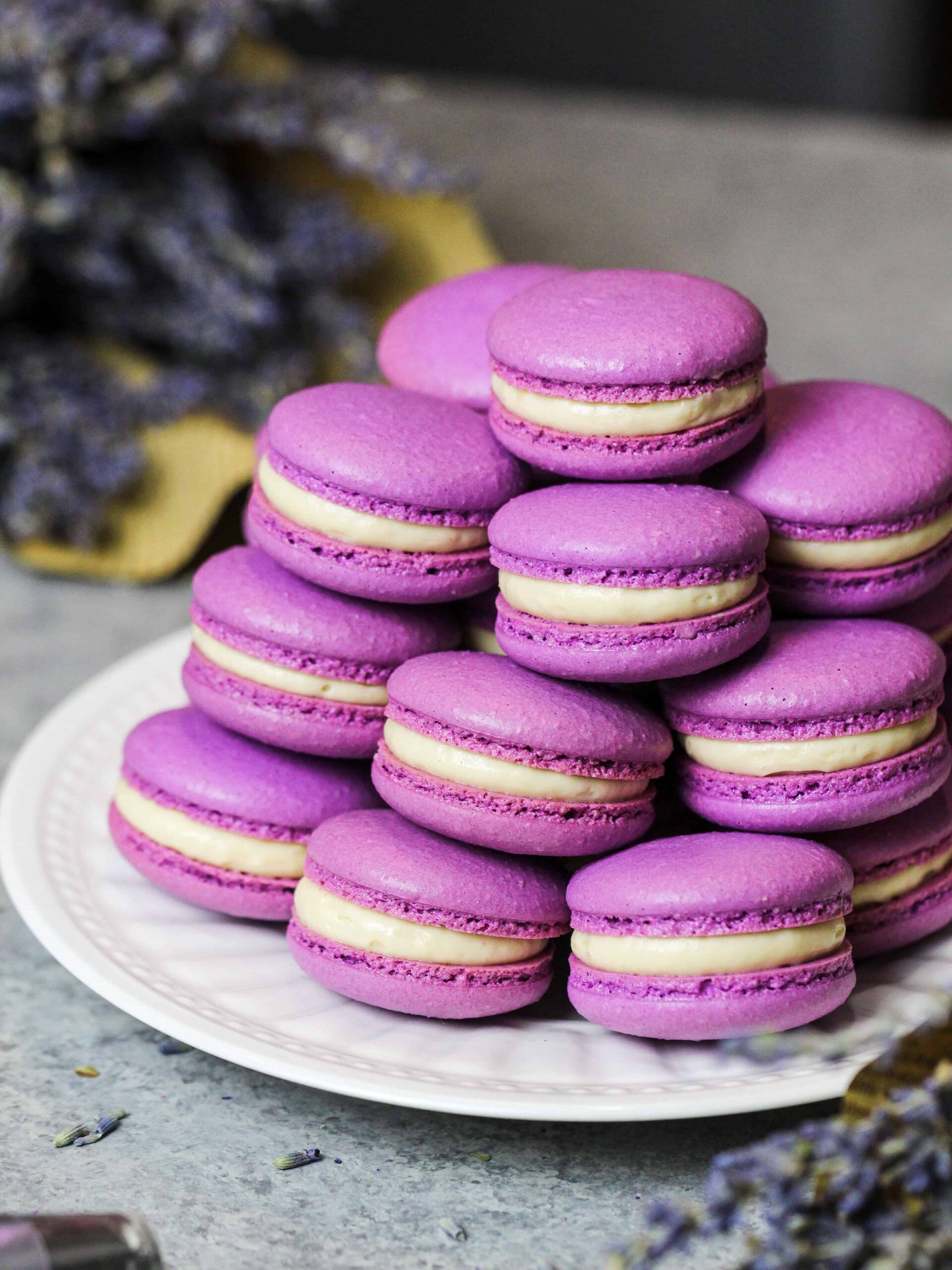
Pipe a small dollop of a filling of your choice on one macaron shell and top it with a second shell.
I love to use my vanilla buttercream recipe, but any type of frosting or ganache will work.
Place the finished macarons in an airtight container and store them in the fridge to mature overnight.
Letting them rest overnight while they are filled softens them (in a good way) and allows the flavors to develop.
Troubleshooting French Macarons
While I’d love to think everyone’s first batch of French macarons will turn out perfectly, my own experience has taught me that’s not how things usually go.
Macarons are incredibly temperamental, and it might take a few tries to get them just right.
Below are some of the issues I’ve run into when baking macarons.
I also share ways to prevent them from happening again.
Why Do My Macarons Have Cracked Shells?
Cracked shells were the first issue I ran into when I started baking macarons.
A few different things can cause cracked shells, including too short of a rest, trapped air bubbles, too hot of an oven, or undermixed batter.
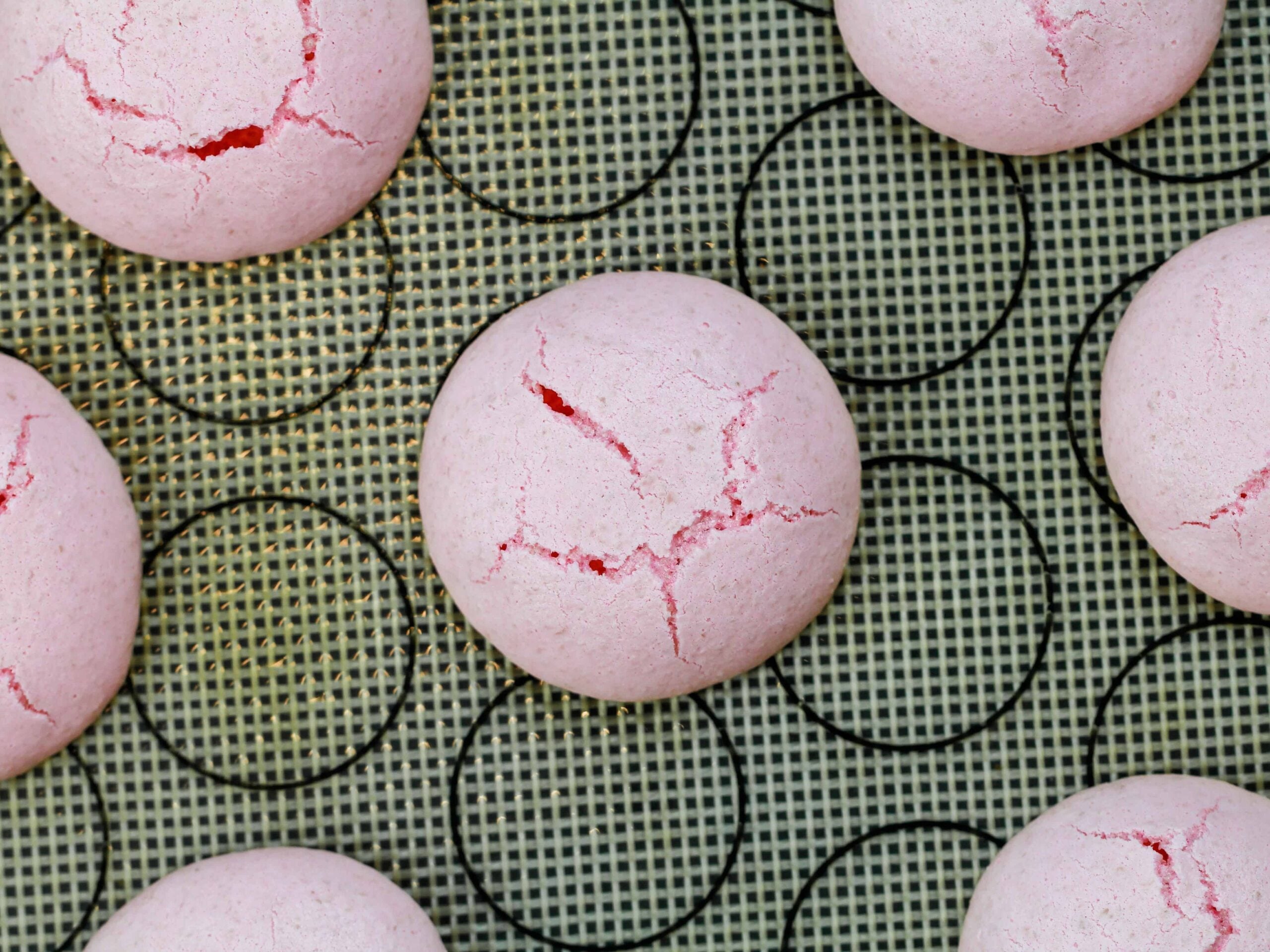
Potential Fixes: Bang your pans firmly before resting your macarons, rest your macarons until they form a skin, check your oven for hot spots, or mix your batter slightly more.
Why Are My Macarons Hollow?
Hollow macarons have big air pockets between the top of the shell and the base of each cookie.
This can happen when the meringue or batter is over-mixed or if air bubbles get trapped before the shells are baked.
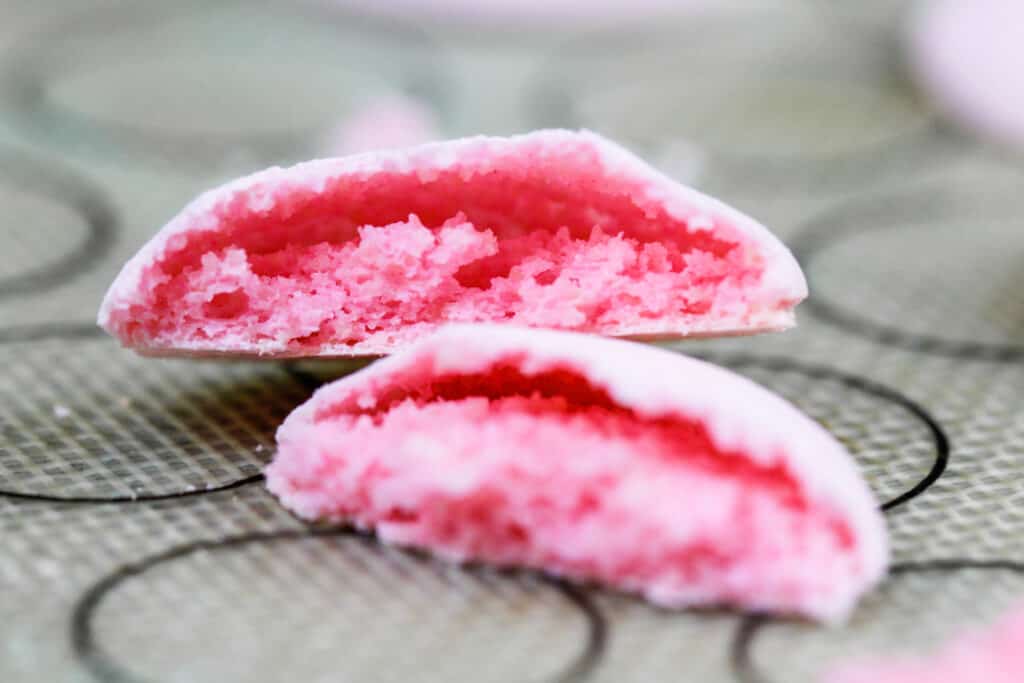
Potential Fixes: Make sure you’re not over-mixing your meringue/batter or bang your pans firmly against your counter before letting them rest.
Why Are My Macarons Sticking to My Baking Sheet?
Your macarons may stick to your mat/parchment paper if they’re underbaked, or if you didn’t let them cool fully before trying to remove them.
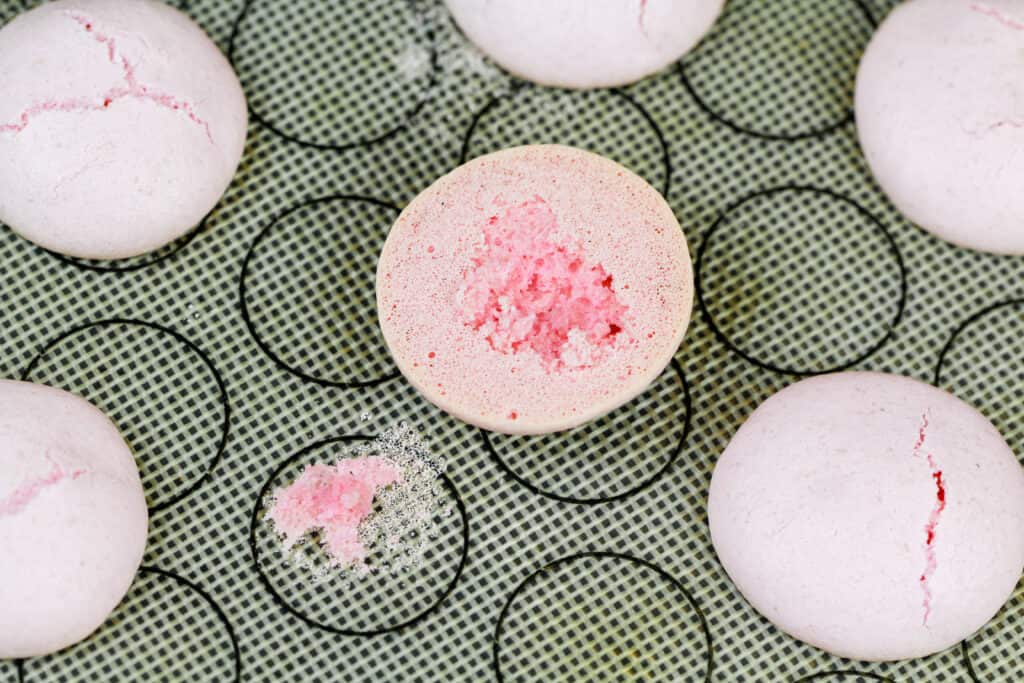
Potential Fixes: Let your macarons cool fully before trying to lift them, or bake them slightly longer.
Why Don’t My Macarons Have Feet?
If your macarons don’t develop feet, it could be because your batter is too wet, your batter was over-mixed, or you didn’t let your macarons rest for long enough.
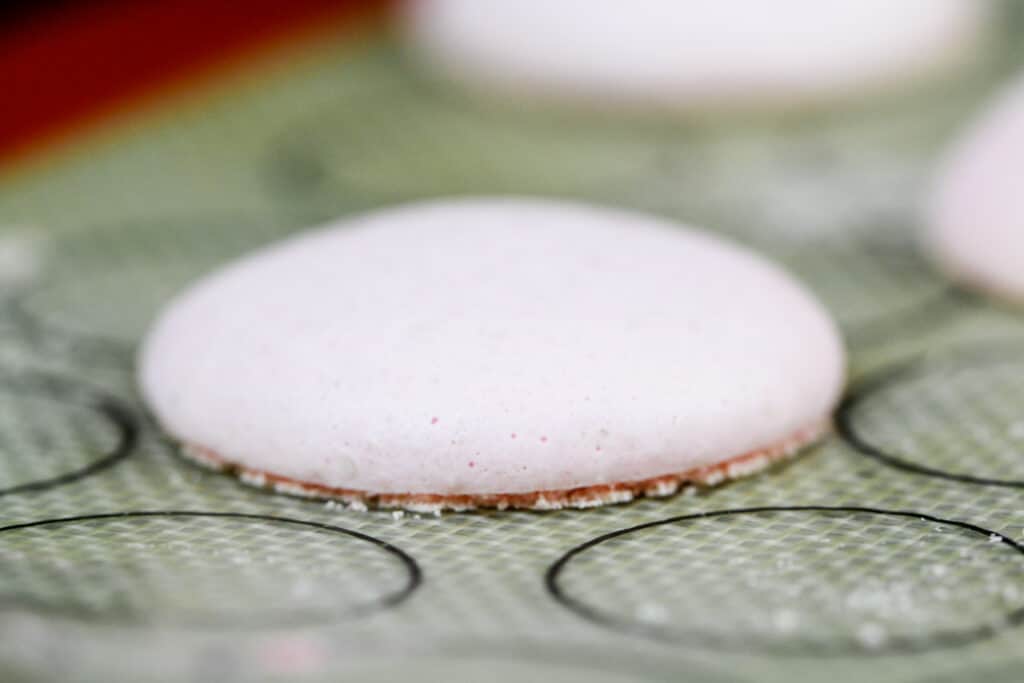
Potential Fixes: Try using aged egg whites, make sure you’re not using any liquid flavoring or food coloring, or let your shells rest until they form a touchable skin (20-40 minutes).
Why Are My Macarons Crispy/Hard?
Sometimes, if your batter is over-mixed, it causes your shells to spread more and bake up crispy.
They may also just be over-baked!
Keep in mind that macaron shells soften once they’re filled and have time to mature in the fridge, so don’t be disheartened if they seem a bit firm once they’ve cooled.
Potential Fixes: Mix your batter less, bake your macarons for less time, brush the bottoms with milk, or fill them and see if the maturation process softens them.
Why Are My Macarons Brown?
There’s nothing worse than baking up a tray of macaron shells only to see they’ve browned!
This is caused by over-baking or hot spots in your oven.
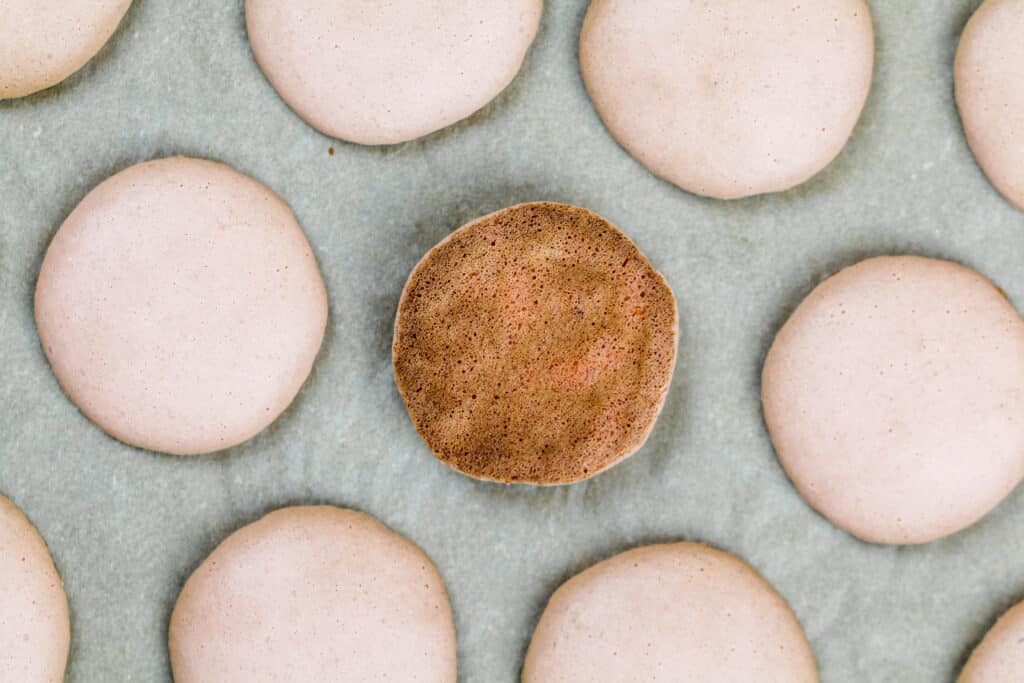
Potential Fixes: Turn down your oven temperature by 5-10 degrees F, bake them for slightly less long, bake the macarons with a pan above them to protect them from the heat, or bake the macarons with two pans.
Why Are My Macarons Uneven?
This can be caused by an uneven baking tray or mat, an oven that bakes unevenly, or uneven piping.
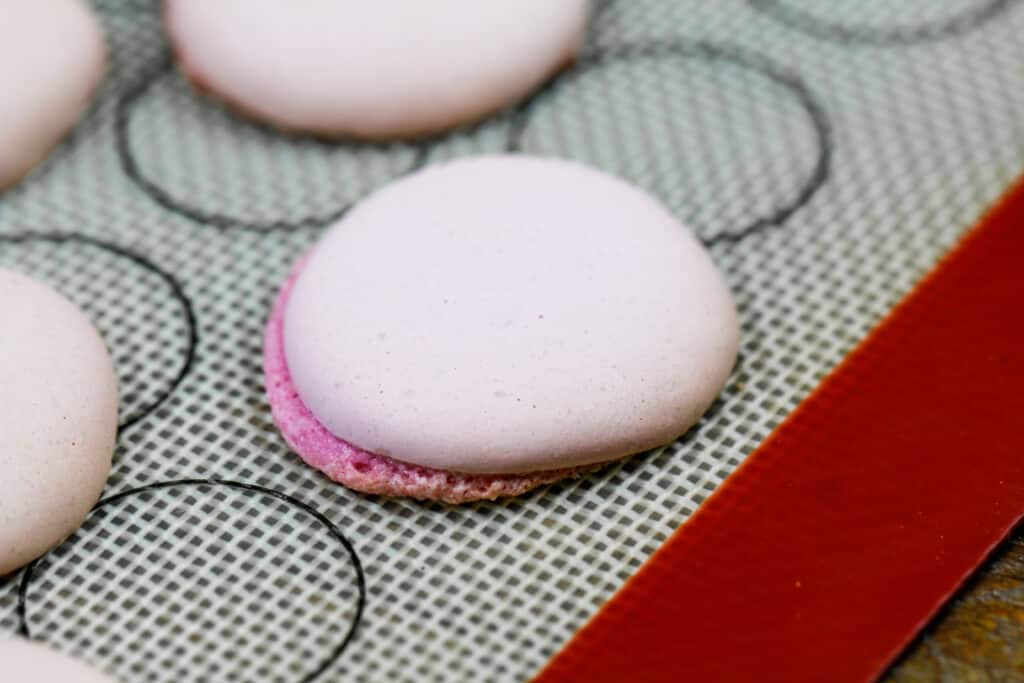
Potential Fixes: Make sure you’re using a good quality pan and silpat mat, test your oven for hot spots, make sure you aren’t baking convection, or take your time when piping and use a template to ensure your macarons are consistent in size and shape.
Choosing the Right Filling for Your French Macarons
While we put tons of energy into the shell of a macaron, almost all the flavor in a macaron comes from its filling.
The shell gives macarons an incredible texture, but the filling is what determines their flavor.
You can use just about any type of frosting or ganache to fill macarons.
I have a big sweet tooth, so I usually prefer using milk or white chocolate ganache or American buttercream.
If you don’t want your macarons to be super sweet, I recommend filling them with my dark chocolate ganache, hybrid buttercream, or Swiss meringue frosting.
You can also pipe a frosting or ganache ring on your macarons and fill it with jam or other fillings to create unique flavors.
Recipe Yield
This recipe makes about 48 macaron shells, which can be used to make 24 macarons.
You can double this recipe to make more macarons if needed.
The yield and bake time will also vary based on the size of the macarons you pipe. I pipe my shells with a diameter of about 1 1/2 inches.
Tips for Making the Best French Macarons
- Carefully read through the directions before making these macarons. There are quite a few steps, and it’s good to know your game plan before you start.
- Wipe your mixing bowl and whisk with lemon juice or vinegar to remove any traces of grease before making your meringue. It will help your egg whites whip up better.
- Separate your own eggs and age them if possible. Do not use egg whites from a carton.
- Measure your ingredients in grams with a kitchen scale. You really need to be precise with this recipe. Your macarons will turn out best if the ingredients are weighed.
- Use a macaron mat or print out a template to help you pipe consistently sized macarons.
- Pipe a small number of macarons on a few sheets to test your oven for hot spots and see if it bakes accurately. This way, you won’t waste a whole tray of macs if your oven runs hot or cold.
- Let your baked and filled macarons mature! Letting them rest overnight while they are filled softens them (in a good way) and allows the flavors to develop.
- If your first batch of macarons doesn’t turn out, please check out the troubleshooting section above for help!
Making These French Macarons in Advance & Storage Tips
- French macarons need to mature for a few hours or overnight in the fridge before being eaten. This gives them time to develop the best texture and taste.
- Store filled macarons at room temperature for up to 2 days in an airtight container.
- Refrigerate filled macarons for up to 5 days in an airtight container.
- Freeze filled macarons for up to a month in an airtight container.
- Unfilled macaron shells can be frozen for up to a month in an airtight container.
- Make your filling ahead of time, too, or save any leftover filling! Store in an airtight container in the fridge for up to a week or in the freezer for up to a month.
Let Me Know What You Think!
If you try this recipe for French macarons, I’d love to hear what you think of it! Please leave a rating and comment below.
And don’t forget to tag me @chelsweets and use #chelsweets on social media so that I can see your amazing creations!

French Macarons
Equipment
Ingredients
French Macarons
- 110 g aged egg whites, room temperature
- 1/4 tsp cream of tartar – optional
- 110 g granulated sugar 1/2 cup + 2 tsp
- 140 g superfine almond flour – blanched 1 1/2 cups
- 125 g powdered sugar 1 cup
- gel food coloring – optional
American Buttercream Frosting
- 56 g unsalted butter, room temperature 1/4 cup
- 4 ml vanilla extract or vanilla bean paste 1 tsp
- 1 g fine salt 1/8 tsp
- 125 g powdered sugar 1 cup
- 10 ml heavy whipping cream, room temperature 2 tsp
Equipment
Instructions
French Macarons (adapted from Laduree Sucre)
- Line two large baking sheets with parchment paper or Silpat mats. Set aside.
- Pour 110g of aged egg whites into the bowl of a stand mixer with a whisk and mix on a medium speed until the surface of the egg whites is covered in small bubbles. Add 1/4 tsp cream of tartar and continue to mix until it reaches the soft peak stage and leaves visible tracks.
- Gradually mix 110g of granulated sugar into the egg whites over a few minutes while mixing on a medium-low speed. Increase the mixing speed to a medium-high speed (6 on a KitchenAid). Keep mixing until stiff, glossy peaks form.
- Sift 140g of superfine almond flour and 125g of powdered sugar into the meringue. Use a rubber spatula to break up any big clumps and press them through the sieve.
- Add in a squirt of gel food coloring if desired. Then fold the ingredients together with a rubber spatula. Use a circular motion that sweeps around the edge of the bowl and then pulls through the bottom of the bowl to make sure everything is getting mixed together. Don't forget to scrape off the inside of the spatula intermittently. Sometimes meringue can get stuck there and not get mixed in properly.
- Fold the batter until a thick ribbon of batter runs off the spatula when it's lifted. You should be able to draw a couple of figure 8s with the batter running off your spatula in a continuous stream when it's the right consistency. If the stream of batter breaks before you're able to do this, you may need to stir it a bit more.
- Pour the batter into a large piping bag fit with a medium-sized round piping tip and pipe 1 1/2-inch rounds on the prepared baking sheets. Space them about 1 inch apart.
- Bang the pans firmly on the counter a few times to release air bubbles, then pop any remaining air bubbles that come to the surface with a toothpick.
- Let the macarons rest for 30 minutes, or until they develop a skin. The macarons should look matte once the skin has formed. While the macarons rest, preheat the oven to 320 F/160°C.
- Bake one tray of macarons at a time on the middle rack of your oven for 18-21 minutes and rotate the pan halfway through to help the macarons bake evenly. Bake time can vary based on the size of your shells, so if you pipe them smaller than 1 1/2 inches, they may be done a few minutes earlier.
- Remove the macaron shells from the oven and let them cool fully on the pan (about 30 minutes), then gently peel them off the Silpat mat. If they're properly baked, they should peel off the mat cleanly and have a shiny bottom.
American Buttercream Frosting
- While the macaron shells bake and cool, make the filling for the macarons.
- Beat 56g of room-temperature butter on a medium speed for a minute with a whisk attachment until it becomes lighter in color and smooth.
- Mix in 4ml vanilla extract and 1g salt on a low speed. Slowly mix 125g of powdered sugar and 10g of heavy cream on a low speed.
- Continue to mix on low for a couple of minutes until the ingredients are fully incorporated and the desired consistency is reached. If the frosting is too thick, add in additional heavy cream or milk (1 tsp at a time). If the frosting is too thin, add more powdered sugar (1 Tbsp at a time).
- Place in a piping bag with a small round tip, and set aside.
Assembling These French Macarons
- Pipe a small dollop of frosting or filling of your choice on the center of one macaron shell and top with a second shell to create a sandwich.
- Place the finished macarons in an airtight container and chill in the fridge overnight, then enjoy!
Video
Notes
Recipe Yield:
This recipe makes about 48 small macaron shells, which can be used to make 24 macarons. You can double this recipe to make more macarons if needed. The yield and bake time can vary based on how large you pipe your shells. I piped these shells with a diameter of about 1 1/2 inches, so they’re about the size of a standard macaron.Tips for Making the Best French Macarons
- Measure your ingredients in grams with a kitchen scale! You really need to be precise with this recipe. Your macarons will turn out best if the ingredients are weighed.
- Separate your eggs and age them if possible! Do not use egg whites from a carton.
- Use gel food coloring if you want to color your macarons. If you try to use liquid food coloring, it can throw off the consistency of the batter.
- Carefully read through the directions before making these macarons. There are quite a few steps, and it’s good to know your game plan before you start!
- Use a macaron mat or print out a template to help you pipe consistently sized macarons.
- FIRMLY bang your pans on your counter after piping your macarons. This helps release any air bubbles that may be trapped and prevents cracked or hollow shells.
- Rest the macaron shells for 30 minutes before they’re baked to allow them to develop a skin.
- Pipe a small number of macarons on a mat to test your oven for hot spots and see if it bakes accurately. This way, you won’t waste a whole tray of macs if your oven runs hot or cold.
- Let your macarons mature in the fridge overnight! Letting them rest overnight while they are filled softens them (in a good way) and allows the flavors to develop.
- If your first batch of macarons doesn’t turn out, please check out the troubleshooting section above for help!
Making These French Macarons in Advance & Storage Tips
French macarons need to mature overnight (or ideally 24 hours) in the fridge before being eaten! They taste best 24 hours after being made. Macarons can be stored at room temperature for up to 2 days in an airtight container. Macarons can be refrigerated for up to 5 days in an airtight container. Filled macarons can be frozen for up to a month, but the length can vary based on the filling. Unfilled macaron shells can be frozen for up to a month in an airtight container. Your filling can be made ahead of time, too, or save any leftover filling! Store in an airtight container in the fridge for up to a week or in the freezer for up to a month.Nutrition
Other Recipes You Might Like:

Hi! Where is the ingredient list? Thanks!
If I wanted to make these macarons smaller in size what temperature and baking time would I use? Thank you 🙂
Hi! I’m loving your cake recipes and have recently struggled with my macarons! So frustrating! I was wondering what the higher powder sugar content does? I have a recipe with less powder sugar compared to almond flour! I know there are so many recipes that work but wondering if you know the science behind the ratios. I’m trying to figure out where mine started to go wrong!??
Love this! How can you tell when the macs are fully cooked? I’ve had trouble with them sticking to my mat after they’ve cooled fully.
@Hope,
How long are you baking them?
If they are sticking to your mat you need to up the time. It also depends on you oven… for me, I do 16 minutes and my macarons are just right. Any longer and they’d brown.
I made these macarons for the first time and they turned out AMAZING! They tasted so good. They only problem was that my macarons were a bit hallow but, I think that happened because I didn’t age my egg whites. Next time I will age them. Thanks for this amazing recipe! Definitely will be making these again.
Hi! I made these and they were really sweet to me personally is there anyway to make them less sweet?
@Reyhana, the sweetness comes mainly from the filling. Using a less sweet buttercream should fix your problem.
Any tips for doubling this recipe? If I just double the amount of ingredients does that work out OK?
I just made my first batch ever. I believe they came out pretty well! I had 28 shells so the batch wound up being a little bigger than your recipe. Five out of 28 cracked, 3 out of 28th had no feet on one side and one out of 28 had no feet on the other side. The bottoms were perfect. They peeled perfectly from the mat. I weighed ingredients, but on an old scale and not on a digital. I had aged eggs, but it did not bring them to room temp. I am thinking I needed to mix just a little bit longer. Can’t wait to try tomorrow! Your recipe was very straightforward forward and easy to follow!
I’ve been trying to perfect this recipe, and almost have it down. My issue is when I pipe the macarons on the mat, I get these “peaks” which I am not sure how to smooth out to get those perfectly rounded smooth macarons. I thought maybe I over-mixed the egg whites but I was getting a great “ribbon” when I added the pwdrd sugar and almond flour. Any thoughts?
@Dominika, the peaks can be smoothed out with a toothpick right after you’ve piped them
Hi Chelsea, I’m so grateful to have found your blog. I am a retired chef but I guess I needed a new challenge (and because I am gluten intolerant) I decided to learn to make a good macaron. My first attempt was not good looking but tasted fine. I began researching and reading more. I bought Pierre Herme’s book “Macarons” and read his 32 steps to a good shell. Anyway I’m grateful for YOU, for your thoughtful instructions, beautiful photographs, inspiring ideas and more. Thank you so much for sharing your very special desserts, recipes, ideas, love and more on this amazing site. I am a huge, grateful fan! I live in the state of WA
Hi Chelsea, I have been using this recipe a lot and it’s amazing!!! But today I decided to be adventurous and added around 1/4 teaspoon of cinnamon a little bit of nutmeg and a pinch of tiny pinch of allspice to the shells. Omg they were amazing!!! Highly recommend 10 out of ten. Thanks for the recipe!!!
Hi Flora,
So happy to hear that!! Those sound so delicious 🙂 Thank you for sharing!!
First time making these in years and they turned out great! I piped a couple on a practice tray and they cracked a litttle and went brown so i turned the oven down. Second practice tray were not brown but tiny bit of cracking and the final proper tray i moved them away from the hotspot in the oven and they had had the longest resting time and they baked perfect so I would recommend baking a couple of shells as practice to check your oven and that they have dried enough. Thanks so much for the recipe im delighted!
YAY!!! That’s so wonderful to hear Cathy 🙂 So happy you did a couple test bakes before baking all of them, I swear it helps so much. Thank you for sharing!!!
Hi I was looking out for a macaron template for your recipe for a round shape. Would you mind emailing it to me. It gave me an error for the one on one of the macaron pages if i tried to download. Thanks.
Michelle
Just sent you an email, happy baking Michelle!
I have been making macarons for years and decided to try this recipe because the cake/frosting recipes here have never failed me (I love them!). Unfortunately the THREE times I tried this recipe, they all ended up cracked. I did all of the things I normally do, so nothing was missing in the process nor was humidity a factor. I don’t understand what’s going on but sad to say this one just didn’t translate well for me.
I’m so sorry to hear that Kelsey!!
When you’ve made macarons in the past, were they French macarons? I only ask because Swiss or Italian macaron batter has a slightly thicker consistency than French macarons, and maybe if you’re used to that then the batter for these French macarons might have been slightly undermixed?
My first thought whenever I head cracked macarons is that the batter that the batter might be slightly undermixed, or that the meringue in a little bit overmixed?? Macarons are challenging because it can be so many different things (I even have a whole post on it!! https://chelsweets.com/cracked-macarons/)
I wish we could share pictures on here because that would help me figure out what might have happened. Did you make any adjustments between the three batches you made? Like did you try to change the oven temperature at all, or mix the batter a different amount? Hopefully we’ll be able to figure out what happened together!
This is my go to Mac recipe! I’ve made them at least 20 times and they always taste great! There is some trial and error in figuring out how much to mix it and how long they should rest but I found the troubleshooting guide very helpful!
I am so happy to hear that Rachel 🙂 You’re too sweet, thank you for sharing!!
For my first try at macarons, they turned out great! I love the troubleshooting tips. I’ll definitely use them when I make them next time and hopefully my shells won’t be as prone to cracking. I made them with chocolate ganache and while they might’ve not be the prettiest (due to my user error!), they were absolutely delicious
So happy to hear that Julia!! The first batch is always the hardest, and I totally agree – taste is always the most important factor 😉 Thanks so much for sharing, and happy baking!
OMG!! Thankyou i have done multiple recipes. This is my go to I absolutely love it.
So happy to hear that Bri!! 🙂 Thank you for sharing!!
Thanks so much! I had previously tried another person’s recipe using the Italian method because it was supposedly more foolproof. However that ended up being fail. I decided to try this recipe because many of your other bakes had worked for me. And sure enough, my macarons came out perfect. I followed it exactly and didn’t run into any issues.
Hi Dominic,
Ahh this makes me so happy to hear!! Macarons can be so tricky, so I’m thrilled this recipe worked out perfectly for you. Especially after a tough experience with another method. Thank you for trusting my recipes, and I’m so glad they turned out just the way you hoped 🙂