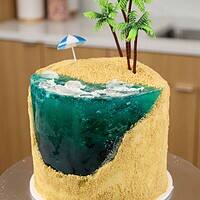
Beach Cake
This beach-inspired cake is decorated with graham cracker crumbs and a gelatin ocean!! It's the ultimate summer cake!
Servings: 20
Calories: 808kcal
Ingredients
Ocean Gradient Jello
- 5 Tbsp powdered gelatin 46g, bloomed in 1 cup cold water (240g)
- 2 cups boiling water 480g
- 1 cup granulated sugar 200g
- 1 cup cold water 240ml
- 1 tsp lemon extract, optional 4g
- turquoise and blue gel food coloring
Vanilla Cake Recipe
- 3 cups all-purpose flour 375g
- 3 cups granulated sugar 600g
- 1 Tbsp unsweetened baking cocoa - just for color! 6g
- 2 1/2 tsp baking powder 10g
- 1 tsp fine salt 6g
- 1 cup unsalted butter, room temperature 226g
- 1 cup carton egg whites or 7 large egg whites, room temperature 235g
- 1 1/2 cups buttermilk, room temperature 360g
- 2 Tbsp vegetable or canola oil 30g
- 2 tsp vanilla extract or vanilla bean paste 8g
- yellow gel food gel food coloring - optional
Vanilla Buttercream Frosting
- 2 cups unsalted butter, room temperature 452g
- 1 Tbsp vanilla extract or vanilla bean paste 12g
- 1/2 tsp fine salt 3g
- 7 cups powdered sugar 875g
- 1/4 cup heavy whipping cream, room temperature 60g
Ocean Jello
- 1 cup powdered gelatin 150g, bloomed in 1 1/2 cups cold water (360g)
- 1 1/2 cups boiling water 360g
- 2 cups granulated sugar 400g
- 1 tsp lemon extract, optional 4g
- blue gel food coloring
Cake Decoration
- 2 cups crushed graham cracker crumbs
- 2 large, thick acetate sheets .007" thickness
- Packing tape
- Mini plastic palm trees
Instructions
Ocean Gradient Jello:
- Make the jello that will be used to make the gradient in the ocean first! It needs a couple hours to set. It can also be made up to a week in advance.
- Mix 5 Tbsp of gelatin and 1 cup of cold water together in a small bowl until combined. Set aside to let the gelatin absorb the water and bloom (this usually takes about 5 minutes).
- In a separate, large bowl mix together 2 cups of boiling water and 1 cup of sugar. Once the sugar is dissolved, mix in the bloomed gelatin, and whisk until combined. Then mix in 1 cup of cold water and 1 tsp of lemon extract.
- Split the mixture between 2 shallow, wide bowls or cake pans and color one turquoise and one deep blue. In the photos above I used 3 colors, but the lightest shade of blue completely blended in with the ocean jelly that's poured on top of the gelatin crumbles! I think making 2 shades will be less work and have the same effect.
- Place these in the fridge to chill and set. This usually takes about 2 hours but can vary based on the depth of the bowl you use. If making these further in advance, cover the bowls with plastic wrap.
Vanilla Cake Layers:
- Next make the vanilla cake layers. Preheat oven to 350°F / 175°C. Line four 7" or three 8" pans with parchment rounds, and grease with non-stick baking spray. I used 7" pans. You can also use this recipe to make 4, 6-inch cake layers but the bake time will be a few minutes longer and your cake will end up being a bit taller than mine. If you don't have 4 cake pans, the batter can sit at room temperature for a few hours. Bake as many layers at a time as you can at a time.
- Mix 3 cups all purpose flour, 3 cups sugar, 1 Tbsp cocoa powder, 2 1/2 tsp baking powder and 1 tsp salt together in a stand mixer with a paddle attachment or hand mixer until combined.
- Mix in 1 cup of unsalted butter slowly into the dry ingredients on a low speed. Continue to mix until no large chunks of butter remain, and the mixture looks like moist sand.
- Pour in 1 cup of egg whites and mix on low until just incorporated. Mix in 1 1/2 cups buttermilk in two installments on a low speed.
- Add in 2 Tbsp of vegetable oil, 2 tsp of vanilla extract, and a squirt of yellow food coloring. Mix at a low speed until fully incorporated. The yellow food coloring combined with the bit of cocoa powder gives these cake layers a perfect sandy color!
- Scrape down the sides of the bowl with a rubber spatula, then beat on a medium speed for about 30 seconds to make sure everything is properly mixed together.
- Divide the batter evenly between the prepared pans. I like to use a scale to make sure each pan has the same amount of batter and will bake up to be the same height.
- Bake for 33-35 minutes or until a toothpick comes out with a few moist crumbs.
- Let the pans cool for 10 minutes, then run a small offset spatula around the perimeter of the pan to separate the cake from the pan.
- Place the cake layers into the freezer for 30 minutes to accelerate the cooling process. Once the layers are fully cooled, carefully flip the pans and remove the layers.
- Use a serrated knife to level the tops of the layers, then stack the cake layers and cut them at an angle (see photo above). This will create space for the gelatin ocean! At this point you can wrap and freeze them if you're making them in advance.
- If you make these cake layers in advance and freeze them, let them thaw for about 20 minutes before assembling this cake. The cake layers should still be slightly cold to the touch, which will make it easier to assemble your cake.
Vanilla Buttercream Frosting:
- While the cake layers bake and cool, make the vanilla buttercream frosting.
- Beat 2 cups of unsalted butter on a medium speed for 30 seconds with a paddle attachment until smooth.
- Mix in 1 Tbsp of vanilla extract and 1/2 tsp salt on a low speed.
- Slowly mix in 7 cups of powdered sugar on a low speed. Add 1/4 cup of heavy cream halfway through to make the frosting easier to mix.
- Continue to mix on a low speed for a few minutes until the desired consistency is reached.
- If the frosting is too thick, add in additional cream (1 Tbsp at a time). If the frosting is too thin, add in more powdered sugar (quarter of a cup at a time).
- Cover the frosting with plastic wrap to prevent crusting and set aside.
Assembling This Beach Cake:
- Stack and frost the cake layers on a greaseproof cake board using a dab of frosting to help stick the first cake layer to the board.
- Add an even layer of buttercream between each cake layer with a large offset spatula.
- Next, cover the cake in a layer of frosting. Make sure you fully cover the cake layers, especially in the area where the gelatin ocean will be added. Otherwise, the gelatin mixture can seep into the cake layers before it sets.
- Smooth using a bench scraper, then wrap the cake tightly with thick acetate sheets. I like to tape the sheets together (I needed two sheets to cover the entire perimeter of the cake) and trim them to be just slightly taller than the cake before wrapping them around the cake. This makes the cake so much easier to store in fridge!
- Place the remaining buttercream in a large piping bag and pipe a thick border around the edge of the cutout section of the cake. This will help prevent any leaks once you add in the gelatin ocean. Place the cake in the fridge to chill while you work on the gelatin ocean.
- Leftover frosting can be left out overnight or refrigerated.
Adding the Jelly Ocean:
- While the cake chills, crumble each pan of chilled, ocean gradient jello with a fork. If you have any whiteish bubbles / foam on top of the gelatin, scoop it out into a separate bowl and place in the fridge. You can use this to make waves on top of the cake later.
- Combine 1 cup of powdered gelatin and 1 1/2 cups of cold water in a mixing bowl. Set aside to let the gelatin absorb the water and bloom (this usually takes about 5 minutes).
- Add 1 1/2 cups of boiling water and 2 cups of sugar into a large mixing bowl and whisk together until combined. Add the bloomed gelatin, lemon extract, and a small drop of blue gel food coloring. Mix until the gelatin is completely dissolved. The mixture should be a light shade of blue.
- Remove the cake from the fridge and add the crumbled blue gelatin into the cut-out area. Add the deep blue gelatin first, followed by the turquoise gelatin.
- Carefully pour the light blue gelatin mixture that was just made over the gelatin crumbles inside the acetate sheet. Set the cake in the fridge and chill overnight (at least 12 hours), or until the gelatin portion is set and firm to the touch.
- Remove the cake from the fridge and carefully peel off the acetate sheet. Cover the cake portion in a second, thin layer of buttercream and avoid the jello section.
- Place the cake in a shallow, rimmed pan and gently press graham cracker crumbs into frosted portion of the cake.
- Add mini palm trees and other beach props to the top of the cake, then cut in and enjoy!
- While the gelatin ocean is edible, it has a super firm texture and is mostly there for show. I recommend serving up just the cake portion of this cake!
Video
Notes
Tips for Making the Best Beach Layer Cake
- Ingredients at room temp mix together better! Set out any cold ingredients ahead of time.
- Properly measure your flour (spoon into the cup measure, then level). Or better yet, use a kitchen scale to measure your dry ingredients.
- Bang your cake pans on the counter before putting it in the oven. This brings any big air bubbles that are trapped in the batter to the surface.
- Level your room temperature or thawed cake layers with a serrated knife to make them easier to stack.
- Chill your cake layers in the freezer for about 20 minutes before trimming them and assembling the cake. It makes it the process so much easier!
- Tightly wrap your cake with thick acetate sheets (.007" thick) and tape them together with packaging tape. This will prevent leaks and keep the ocean gelatin in place.
Making This Beach Cake in Advance & Storage Tips
Make your cake layers in advance and freeze them. It breaks the process up and makes it more approachable. Make your frosting ahead of time too or save any leftover frosting! It can be stored in an airtight container in the fridge for up to a month, or in the freezer for up to 3 months. Be sure to give it a good stir once it thaws to get the consistency nice and smooth again. A frosted cake can last in the fridge for up to a week. The buttercream locks in all the moisture, keeping the cake fresh and delicious!Nutrition
Serving: 1 | Calories: 808kcal | Carbohydrates: 121g | Protein: 12g | Fat: 32g | Saturated Fat: 19g | Polyunsaturated Fat: 11g | Cholesterol: 79mg | Sodium: 373mg | Fiber: 1g | Sugar: 101g