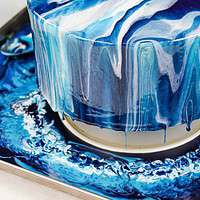
Blue Mirror Glaze Recipe
Learn how to make this gorgeous, ocean-inspired blue mirror glaze cake! It's made with butter cake layers, smooth buttercream, and a white chocolate mirror glaze.
Servings: 24
Calories: 687kcal
Ingredients
Vanilla Cake Recipe
- 3 cups all-purpose flour 390 grams
- 3 cups granulated sugar 600 grams
- 2 1/2 tsp baking powder 10 grams
- 1 tsp fine salt 6 grams
- 1 cup unsalted butter, room temperature 226 grams - 2 sticks
- 1 cup carton egg whites, room temperature or about 7 egg whites (235 grams)
- 1 1/2 cups full-fat sour cream, room temperature 345 grams
- 2 Tbsp vegetable or canola oil 28 grams
- 2 tsp vanilla extract or vanilla bean paste 8 grams
- Blue gel food coloring if desired
Vanilla Buttercream Frosting
- 2 cups unsalted butter, room temperature 454 grams
- 1 Tbsp vanilla extract or vanilla bean paste 12 grams
- 1 tsp fine salt 6 grams
- 7 cups powdered sugar 875 grams
- 1/4 cup heavy whipping cream, room temperature or whipping cream (60 grams)
Mirror Glaze Recipe
- 2 1/2 tsp (1 envelope) powdered unflavored gelatin 7 grams, bloomed in 1/4 cup of additional water
- 1 1/2 cups granulated sugar 300 grams
- 3/4 cup water, room temp 180 grams
- 2/3 cup sweetened condensed milk 200 grams
- 1 2/3 cup white chocolate chips, melted 300 grams
- 1/2 tsp titanium dioxide or white gel food coloring
- Blue gel food coloring
Additional Decorations – Optional
- Graham cracker crumbs
- White fondant
- Small silicone seashell mold
Equipment Needed
- 8- inch cake pans
- Spinning cake stand
- 8- inch cake board
- Large offset spatula
- Bench Scraper
- Electric hand mixer
- Microwave
- Mesh Strainer
- Digital thermometer
- Rimmed baking tray
Instructions
Vanilla Cake Layers:
- Preheat oven to 350°F. Line three 8" cake pans with parchment rounds and grease with non-stick baking spray.
- Mix together 3 cups all-purpose flour, 3 cups sugar, 2 1/2 tsp baking powder and 1 tsp salt in a stand mixer with a paddle attachment or hand mixer until fully combined.
- Mix in 1 cup of unsalted butter slowly into the dry ingredients on a low speed. Continue to mix until no large chunks of butter remain and the mixture looks crumbly.
- Pour in 1 cup of egg whites and mix on low until just incorporated, then mix in 1 1/2 cups of sour cream on a low speed.
- Add in 2 Tbsp of vegetable oil and 2 tsp of vanilla extract and mix at a low speed until fully incorporated. If you plan to color your cake layers, add the gel food coloring with the vanilla and oil.
- Scrape down the sides of the bowl with a rubber spatula, then beat on a low speed for about 30 seconds to make sure everything is properly mixed together.
- Divide the batter evenly between your prepared pans. Bake for 33-35 minutes or until a toothpick comes out with a few moist crumbs.
- Allow the pans to cool for 10 minutes, then run a small offset spatula around perimeter of the pan to separate the cake from the pan.
- Place cake layers into the freezer for 30 minutes to accelerate the cooling process. Once the layers are fully cooled, carefully flip the pans and remove the layers.
- Use a serrated knife to level the tops of the layers right before you plan to assemble your cake, or you can wrap and freeze them in you're making them in advance.
- If you make these cake layers in advance and freeze them, let them thaw for about 20 minutes before making your cake. The cake layers should still be slightly cold to the touch, which will make it easier to assemble your cake.
Vanilla Buttercream Frosting:
- While the cake layers bake and cool, make the vanilla buttercream frosting.
- Beat 2 cups of unsalted butter on a medium speed for 30 seconds with a paddle attachment, until smooth.
- Mix in 1 Tbsp of vanilla extract or vanilla bean paste and 1 tsp salt on a low speed.
- Slowly add in 7 cups of powdered sugar, 1 cup at a time. Alternate with small splashes of 1/4 cup of heavy cream.
- Continue to mix on low speed for a few minutes, until the desired consistency is reached.
- If the frosting is too thick, add in additional cream (1 TBSP at a time). If the frosting is too thin, add in more powdered sugar (quarter of a cup at a time).
- Cover the buttercream with plastic wrap once it’s ready to
prevent crusting.
Assembling the Cake:
- Stack and frost cake layers on a greaseproof cake board the same size as the cake layers.
- Add an even layer of buttercream between each cake layer with a large offset spatula.
- Add a thin coat of frosting around the cake, fully cover the cake layers.
- Smooth using a bench scraper, then chill the cake in the fridge
(20 minutes) or freezer (5 minutes) until the frosting is firm to the touch. - Add a second, thicker layer of frosting to the cake, and smooth using a bench scraper. Place the cake in the fridge (1 hour) or freezer (15 minutes) until the frosting is totally chilled.
Mirror Glaze:
- While the cake chills, make the mirror glaze. Pour 1 1/2 cups of granulated sugar, 3/4 cup of water, and 2/3 cup sweetened condensed milk in a heatproof bowl.
- Heat for 2 minutes on high power in the microwave. Remove the mixture and stir.
- Mix 1 envelope of about 2 1/2 tsp gelatin in a small bowl with 1/4 cup of water. Let this sit for a couple minutes until the gelatin is hydrated.
- Pour the bloomed gelatin into the sugar water and whisk until the gelatin is fully dissolved.
- Melt 1 2/3 cup white chocolate in the microwave by heating in 30 second intervals, stirring between each interval. Once the white chocolate is fully melted, pour the chocolate into the warm gelatin mixture.
- Carefully whisk mixture until fully combined. Pour through a sieve to remove any chunks of un-melted chocolate or stubborn bits of gelatin, or blend with an immersion blender.
- Pour 50 grams of mirror glaze into a small bowl and mix in 1/2 tsp of titanium dioxide. Set aside.
- Divide the remaining glaze between three bowls – there should be about 350 grams per bowl. Color them different shades of blue using gel food coloring.
- Place a chilled buttercream cake on top of a circular object smaller than the cake board, and set this on top of large, rimmed baking sheet to catch the run-off glaze.
- Once the glaze has cooled to about 95 F /47 C it’s ready to be poured.
- Pour the darkest blue glaze onto the center of the cake, then slowly work out to the edges of the cake in a circular motion until the cake is covered. Alternate the shades of blue as you pour them to create an ocean-inspired look. Be sure to save a little bit of each color for the next step.
- Once the cake is fully covered, swipe a large offset spatula covered with the white mirror glaze across the top of the cake to create a marbled look, then drizzle with a bit of additional blue glaze.
- Let the glaze continue to drip for about 10 minutes then scrape away excess glaze from the bottom of the cake board using a small offset spatula.
- Add crushed graham crackers around the base of the cake and garnish with small fondant seashells if desired.
Video
Notes
One batch of this mirror glaze makes about 4 cups, which is more than enough glaze to cover one, eight inch layer cake.
If you plan to eat the cake within a few hours after pouring the glaze, leave it out at room temp.
If you pour the glaze in advance, store the cake in the fridge. Remove the cake from the fridge a couple hours before you plan to cut into it.
Make this mirror glaze ahead of time or save leftovers! Once it's made, wrap the bowl with plastic wrap store in the fridge for up to a week.
To use chilled glaze, heat the bowl in to the microwave for 15-20 second intervals until it reaches the right consistency
Use leftover glaze to top cupcakes, cookies, or even ice cream!
Nutrition
Serving: 1 | Calories: 687kcal | Carbohydrates: 99g | Protein: 5g | Fat: 31g | Saturated Fat: 18g | Polyunsaturated Fat: 11g | Cholesterol: 74mg | Sodium: 339mg | Fiber: 1g | Sugar: 85g