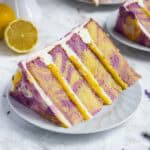
Lemon Lavender Cake
This lemon lavender cake is so delicious and has the perfect balance of flavor between the delicate floral notes of lavender and bright citrus!
Servings: 24
Calories: 526kcal
Equipment
Ingredients
Lemon Curd
- 1 cup granulated sugar 200g
- 2 tbsp lemon zest - zest of 2 large lemons 10g
- 6 large egg yolks 150g
- 1/2 cup lemon juice - juice of 2 large lemons 120g
- 1/2 cup butter unsalted, cold and cut into Tbsp-sized pieces 113g
Lavender Milk
- 1 cup whole milk, room temperature 240g
- 3 Tbsp dried culinary lavender 8g
Lemon Lavender Cake Recipe
- 3 cups granulated sugar 600g
- 2 Tbsp lemon zest - about 2 large lemons 10g
- 3 cups cake flour 360g
- 2 1/2 tsp baking powder 10g
- 1 tsp fine salt 6g
- 1 cup (2 sticks) unsalted butter, room temperature 226g
- 1 cup carton egg whites or 7 large egg whites, room temperature 240g
- 1 cup full-fat sour cream, room temperature 250g
- 1/2 cup lavender milk - made in recipe above 120g
- 2 Tbsp vegetable or canola oil 28g
- 1 tsp vanilla extract or vanilla bean paste 4g
- purple and yellow gel food coloring optional
Lavender Buttercream Frosting
- 8 large egg whites, room temperature 240g
- 2 1/2 cups granulated sugar 500g
- 2 cups (4 sticks) unsalted butter, room temperature 452g
- 1/4 cup lavender milk, room temperature 60g
- 2 tsp vanilla extract or vanilla bean paste 8g
- 1/2 tsp fine salt 3g
- purple and yellow gel food coloring
Instructions
Lemon Curd
- Make the lemon curd first so that it has time to cool and thicken. Separate 6 yolks from the whites and set aside the egg whites to make the Swiss meringue buttercream later in the process. Make sure the eggs are cold when you separate them; it makes the process easier.
- Add 1 cup of sugar into a small saucepan. Zest 2 lemons into the saucepan and massage the zest into the sugar with your fingertips. This helps release the oil in the zest and gives this curd a bright, citrusy flavor.
- Add in 6 egg yolks and whisk the mixture together until it becomes lighter in color. Then mix in the juice of 2 large lemons (about 1/2 cup).
- Heat on medium-low, stirring constantly with a wire whisk until the mixture thickens and just starts to bubble.
- Remove the pan from heat, then add 1/2 cup of cold butter that's been cut into smaller pieces. Mix until the butter is fully melted and the ingredients are combined.
- Pour the lemon curd through a fine mesh strainer into a separate bowl to remove any bits of cooked egg, zest, or lemon seeds. This gives it a perfectly smooth texture! Set aside to cool. If you make the curd in advance, cover it flush with plastic wrap to prevent it from forming a skin and store it in the fridge for up to a month.
Lavender Milk
- Next, make the lavender milk. Pour 1 cup of milk into a small saucepan.
- Heat over medium heat until the milk begins to simmer. Remove the pan from the stovetop. Add 3 Tbsp dried lavender to the milk.
- Let the mixture steep for 15 minutes, then pour the liquid through a strainer into a small bowl. You should end up with just a little over 3/4 cup (the lavender will absorb some of the milk). Set aside to cool before using in the cake batter and frosting.
Lemon Lavender Cake Layers
- Then it's time for the cake layers! Preheat the oven to 350°F/175°C and line and grease three, 8-inch cake pans or four, 7-inch cake pans with parchment rounds and non-stick spray (I used 7-inch cake pans).
- Add 3 cups sugar and 2 Tbsp lemon zest into a large bowl or the bowl of a stand mixer. Use your fingertips to massage the zest into the sugar to help release the oil in the zest. You should be able to smell the oils being incorporated into the sugar.
- Add 3 cups cake flour, 2 1/2 tsp baking powder, and 1 tsp salt into the bowl with the sugar and whisk together until combined.
- Then mix in 1 cup (2 sticks) of unsalted butter with a paddle attachment or hand mixer on a low speed. Continue to mix until no large chunks of butter remain, and the mixture looks like moist sand.
- Mix in 1 cup of egg whites on a medium speed until incorporated. The batter should be quite thick at this point.
- Then add in 1 cup sour cream, 1/2 cup lavender milk (made in the recipe above), 2 Tbsp vegetable oil, and 1 tsp vanilla extract. Mix on a low speed until incorporated.
- Scrape down the sides and bottom of the bowl with a rubber spatula, then beat on a medium speed for about 30 seconds to make sure everything is properly mixed together. This cake recipe uses the reverse creaming method, so this step is important to help give the cake layers a lighter texture.
- Pour half of the cake batter (about 900g) into a separate bowl. Use a small drop of gel food coloring to color one bowl of batter purple and the other bowl yellow.
- Alternate spoonfuls of both colors of batter into the prepared pans. Use a butter knife or a small offset spatula to swirl the batter together. Bake for 33-36 minutes or until a toothpick comes out with a few moist crumbs. Let the cake layers cool in the pans for 10 minutes, then run a small offset spatula around the perimeter of the pan to separate the cake from the pan.
- Flip the cake layers onto a wire rack to cool. Use a serrated knife to level the top of the layers once they're fully cooled.
- If you make these cake layers in advance and freeze them, let them thaw for about 20 minutes before assembling your cake. The cake layers should still be cold to the touch, which will make it easier to assemble your cake.
Lavender Swiss Meringue Frosting
- While the cake layers bake and cool, make the lavender buttercream frosting. Before making the frosting, be sure to thoroughly clean your mixing bowl. If there’s any grease it can make it difficult to whip up the meringue.
- In a medium-sized pot, add about 1 inch of water and bring to a simmer.
- Add 8 egg whites (use the 6 egg whites saved from making the lemon curd, plus two additional egg whites) and 2 1/2 cups of granulated sugar into a large metal bowl.
- Place the bowl on top of the pot filled with simmering water. The bowl should create a seal over the pot. Make sure the water isn’t actually touching the bottom of the bowl, or it can cook the egg whites.
- Whisk the mixture constantly for about 3 minutes, until it reaches 160°F / 71°C. You can test the mixture to see if it’s ready by rubbing a tiny bit between your fingertips. The sugar should be fully dissolved, and it should feel super smooth and hot to the touch.
- Lift the bowl away from the pot and dry the bottom with a towel. Pour the mixture into the bowl of a stand mixer and beat on a medium-high speed with a whisk attachment. Mix for about 10 minutes, or until you have stiff, glossy peaks.
- Mix in 2 cups of unsalted butter at a medium speed, 1 stick at a time. Then add 1/4 cup lavender milk (made in recipe above), 2 tsp vanilla extract, and 1/2 tsp salt, and mix on medium until fully incorporated. Scrape the sides and bottom of the bowl with a rubber spatula as needed.
- The frosting should have a thick, whipped consistency at this point. If it looks lumpy or broken, keep mixing until it looks smooth and thick. If it doesn't seem to come together after an additional 10 minutes of mixing, check out my Swiss meringue troubleshooting guide.
- To make the frosting extra smooth, swap out the whisk attachment for a paddle attachment and continue mixing on a low speed for a couple of minutes. Wait to color the frosting until the cake has been filled and frosted.
- Place the frosting in a large piping bag and cut a 1-inch opening at the base of the bag. Set aside.
Assembling this Lemon Lavender Cake
- Stack and frost cake layers on a greaseproof cake board or flat plate using a dab of frosting to help stick the first cake layer to the board.
- Spread a thin layer of buttercream on top of each cake layer. Pipe a thick ring of buttercream around the edge of the cake layer and fill the center with lemon curd. I like to add about 1/2 cup between each layer. Flip the top cake layer upside down to make it easier to frost and get sharp corners.
- Chill the cake in the freezer for 5-10 minutes to prevent the layers from sliding, then add a thin coat of frosting around the cake that fully covers the cake layers. Smooth using a bench scraper, then chill the cake again in the fridge (30 minutes) or freezer (10 minutes) until the frosting is firm to the touch.
- Set aside 2/3 cup of frosting, then add a second layer of frosting to the cake with the remaining buttercream. Use a large offset spatula to give the frosting a textured look.
- Color half of the reserved frosting yellow, and the other half purple with gel food coloring. Use a small offset spatula to add colorful swipes of frosting around the cake and blend them into the white frosting. Then enjoy!
Video
Notes
If you need to make any substitutions or swaps in this recipe, please check out the section on ingredient substitutions in the post above.
Making this Lemon Lavender Layer Cake in Different Sizes
One batch of batter is about 1800g or 10 cups, so I add roughly 600g to each of my cake pans when using 3, 8-inch cake pans, or 450g to my cake pans when using 4, 7-inch cake pans. You can also use one batch of batter to make 2, 9-inch cake layers or 4, 6-inch cake layers. Bake time will be a few minutes longer at 350°F/175°C. If you want to make a tiered cake with this recipe, check out my cake batter calculator to see how many batches of batter you'll need. If you want to make lemon lavender cupcakes, bake them at 350°F/175°C for 18-21 minutes. One batch of batter will make about 3 dozen cupcakes (yield will vary based on the size of your liners). Or if you just want to make a dozen cupcakes, you can use my lemon lavender cupcake recipe.Tips for Making the Best Lemon Lavender Layer Cake:
- Let the dried lavender steep in the milk for 15 minutes to give this cake an amazing flavor!
- Properly measure your flour (spoon into the cup measure, then level) or use a kitchen scale to measure your dry ingredients.
- Ingredients at room temperature mix together better. Set out any cold ingredients ahead of time.
- Chill the cake layers in the freezer for about 20 minutes before assembling the cake. This makes it a lot easier to stack and frost.
- Chill the entire cake before adding the crumb coat. This will help lock all the lemon curd filling in place and prevent the cake layers from sliding.
- If your cake layers do seem to be sliding, insert a wooden dowel or chopstick through the center of the cake to help keep the layers in place.
Making This Cake in Advance and Storage Tips
I highly recommend making the components of this cake in stages. It breaks the process up and makes it so much more approachable! The lemon curd can be made up to a month in advance and stored in the fridge. Just be sure you save the egg whites to make the Swiss meringue buttercream. The cake layers can also be made in advance and frozen. They taste just as great when they're frozen as when they're fresh, I promise! You can make the frosting ahead of time or save any leftover frosting! It can be stored in an airtight container in the fridge for up to a month. Let it come to room temperature, then give it a good stir (or quick re-whip) to smooth it out. If you cut into the cake and have leftovers, use any remaining frosting to cover the cut section to keep it moist and store it in the fridge for up to a week.Nutrition
Serving: 1 | Calories: 526kcal | Carbohydrates: 90g | Protein: 9g | Fat: 16g | Saturated Fat: 6g | Polyunsaturated Fat: 8g | Cholesterol: 97mg | Sodium: 380mg | Fiber: 1g | Sugar: 70g